You find a dress you like, open the size menu, and pause. The label you usually buy is there, but the chart puts your bust in one row and your waist in another. Choosing the familiar number may feel easier than sorting that out. It also leaves the important question unanswered: what is this particular dress designed to fit?
To choose a dress size online, take your current body measurements, compare them with the exact brand’s chart for that dress, and read the fit notes before deciding. Check whether the numbers describe a body or the finished garment. If your measurements cross sizes, ask about the specific cut instead of relying on a universal size-up rule.
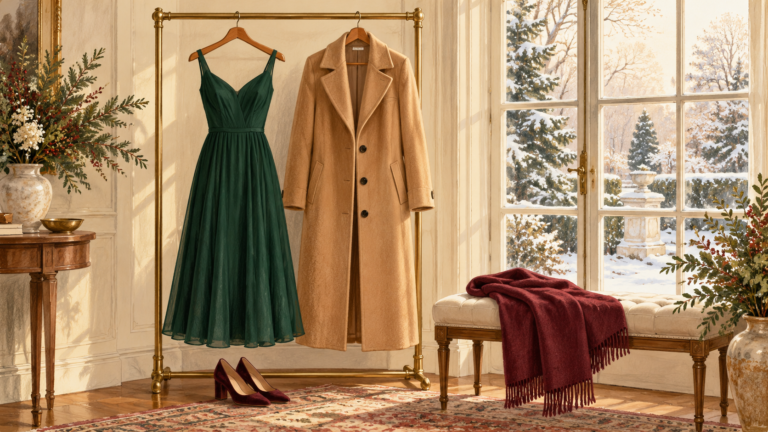
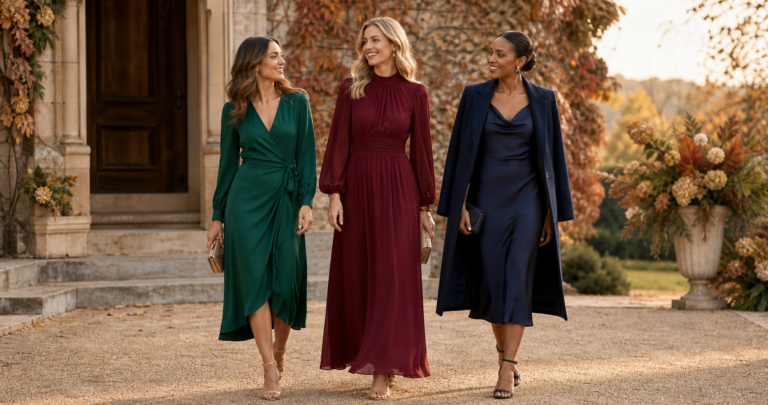
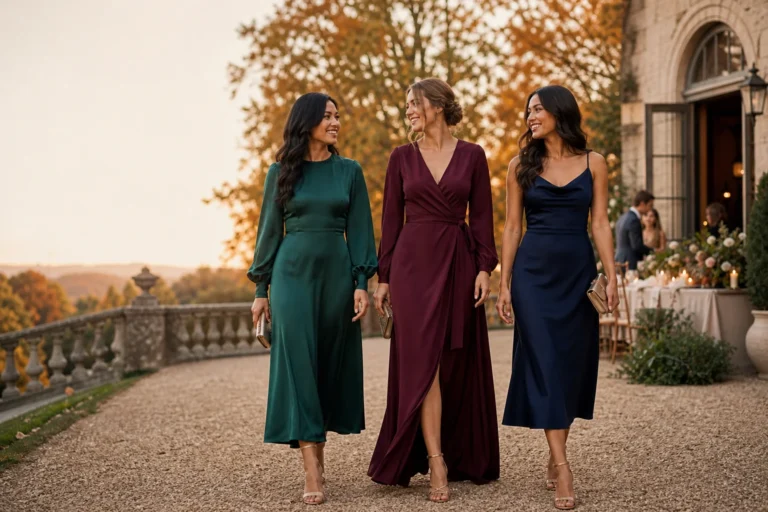
This is a shopping-planning guide, not a fit guarantee or a review of tested dresses. The images are AI-generated style illustrations; the measurement instructions and fictional example are in the text and tables.
Link disclosure: This guide has no affiliate product links. Our linked casual summer dress shopping guide contains affiliate links; we may earn a commission on qualifying purchases made through that guide.
First, check what the chart measures
A body-measurement chart describes the measurements a size is intended to fit. A finished-garment chart describes the clothing itself. Those numbers answer different questions. A flat garment width, such as a pit-to-pit measurement, is different again; do not read it as your full bust measurement.
ASOS’s dress size guide, for example, identifies its charts as body measurements for its own-brand clothing and notes that other brands can vary. Read that wording on the actual product page rather than carrying the same size label from one shop to the next.
Before using a chart, note:
- The brand and exact dress or product code.
- The sizing range: regular, petite, tall, maternity or another named range.
- Whether measurements are for a body, a finished garment or a garment laid flat.
- The units and the size system shown, such as US or UK.
If the chart does not explain its numbers, ask the retailer before ordering. A more detailed chart from a different brand does not fill that gap.
Take your bust, waist and hip measurements
Use a flexible tape and a mirror. Nordstrom’s measuring guide recommends undergarments rather than clothing and a tape that stays level around the body.
Stand naturally and keep the tape against the body without pulling it tight. Write down the reading as it is; do not change it to match a size you hope to order. If the dress brand gives different or additional measuring instructions, follow those and record the method alongside the number.
| Measurement | Starting point | Check before recording |
|---|---|---|
| Bust | Measure around the fullest part, following the brand’s instructions. | Check that the tape stays level across your back. |
| Natural waist | Find the natural waist crease by bending gently to one side, then stand normally to measure. | Do not substitute the waistband position of your jeans. |
| Hips | With feet together, measure around the fullest hips and rear. | Check the tape position in the mirror rather than judging from the front alone. |
Measure again if a reading seems inconsistent. Record the date and units so you can tell a fresh measurement from an old note. You do not need to collect every possible body measurement for every dress; add others when that brand or design calls for them.
Do not add a fixed allowance to a body-size chart
The space between a body and a garment is often discussed as ease. Pattern maker Tilly and the Buttons explains body measurements, finished measurements and ease in its sewing guidance. It also notes that some stretch designs deliberately use finished dimensions smaller than body dimensions. That is design context, not an instruction to buy a smaller ready-made dress.
For online shopping, the useful distinction is simple: follow the brand’s stated chart method. Do not automatically add a set number of inches to your waist, subtract space because a dress looks stretchy, or treat every finished garment measurement as a body-size recommendation. Fabric construction, lining and the intended cut need item-specific information.
If you compare a dress you own, ask the retailer how its garment was measured and use a comparable method. A curved seam, a gathered section or a different measuring point can make two numbers a poor comparison.
When your measurements fall into different sizes
Use the mismatch as a question to investigate. Start with where the dress is close-fitting and how it fastens, then check the brand’s advice. Choosing a size for the bust alone will not resolve a waist or hip measurement that falls outside the same row.
The table below is invented solely to explain this decision. It is not a retailer chart, a size conversion or a recommendation for any real dress. In this fictional example, a shopper records a bust of 95 cm, waist of 80 cm and hips of 105 cm.
| Invented chart row | Bust range (cm) | Waist range (cm) | Hip range (cm) |
|---|---|---|---|
| A | 92–96 | 74–78 | 100–104 |
| B | 96–100 | 78–82 | 104–108 |
| Shopper’s example | 95 | 80 | 105 |
The bust falls in A, while the waist and hips fall in B. A therefore does not match all three measurements under these invented rules. B is not a guaranteed answer either: the bust is below its stated range, and the table says nothing about shoulders, bodice shape or length.
A useful next question would be: “My measurements cross these two rows. For this exact dress, how would you recommend choosing a size, particularly through the bodice?” If the answer remains vague, consider a different cut or wait until you can try it on. You can leave a size unresolved rather than forcing a recommendation.
Read the construction notes before choosing
Look for details that the size menu cannot show on its own. Does the dress have a fitted waist or an adjustable tie? A side zip, buttons or a pull-on opening? Is the lining described separately? These details give you better questions to ask; they do not prove that the dress will fit.
For instance, ask where a wrap-style dress adjusts and what remains fixed. A visible tie does not mean every part is adjustable. If a listing mentions stretch, check whether that description covers the lining too. If it describes a relaxed fit, ask what that means for the specific measurements you need.
A tailor may be able to assess an alteration, but do not buy on the assumption that every dress can be taken in or let out. Ask about the exact construction and likely work before relying on that plan.
Check length separately from the size label
Read the stated dress length and its measuring method. Nordstrom’s guide illustrates dress length from a shoulder reference point to the hem; another listing may use a different starting point. Compare like with like when checking a dress you already own.
A model’s height and the size worn can provide context, but neither tells you exactly where the hem will fall on you. If the length or waist position is important, ask for those garment measurements. A larger size is not a reliable way to solve a length question.
You can use these checks while comparing styles in our casual summer dress guide. For an occasion outfit, try the dress with its intended layer too; our winter wedding layer guide includes coat and sleeve-room checks.
Copy this measurement and order worksheet
Keep this in your own notes, then fill a separate copy for each dress you are seriously considering. Leave a field unknown if the retailer has not supplied it.
| Item to record | Your note |
|---|---|
| Brand, dress name, product code and URL | ____________________ |
| Measurement date and units | ____________________ |
| Your bust / waist / hips | ____________________ |
| Chart type and sizing range | ____________________ |
| Rows that match and areas still uncertain | ____________________ |
| Dress length and measuring method | ____________________ |
| Fastening, lining and adjustment details | ____________________ |
| Retailer’s item-specific fit advice | ____________________ |
| Return eligibility, deadline, cost and conditions | ____________________ |
| Decision: order, ask a question, or keep looking | ____________________ |
Before ordering, read the current returns terms for that seller and item, including any final-sale restrictions. Avoid assuming that an earlier order’s terms still apply. Keep the relevant chart and fit notes with your order details so you know what you based the decision on.
When the dress arrives, check it before removing tags
Follow the retailer’s try-on and return conditions. Fasten the dress as intended, then sit, walk and reach in the outfit. Look at the neckline, waist position, sleeves and hem as well as whether the fastening closes. Try your planned undergarments and shoes where appropriate.
The decision is whether this dress works for you, not whether you can make yourself match the label. If it does not work, record which area was wrong before deciding whether another size, another cut or no replacement makes more sense.
Common online dress-sizing questions
Can I use my usual size from another brand?
Use it as a starting point for browsing, then check the exact chart and fit notes. A familiar label does not establish the measurements for a different dress.
Should I always choose the larger size?
No single rule resolves every dress. Compare all the relevant measurements and ask for item-specific advice when they cross rows. A larger size may change more than the area you wanted to adjust.
Can I rely on an international size converter?
A converter can help identify the labels a retailer uses, but it cannot replace that brand’s measurements or explain the cut. Confirm the size system and chart on the product page before selecting.
Should I order two sizes to compare?
First check the seller’s terms, the money you would have tied up, and any return costs. If ordering more than one is permitted and practical for you, it is an option rather than a requirement. Asking a specific fit question may be enough to decide your next step.
Editorial note: This is researched shopping guidance, not professional tailoring advice or a test of particular dresses. The numerical example is fictional. AI assisted preparation, and the illustrations depict generic garments rather than measured or tested products.