The dress is sorted. Then you look at the forecast and realize you still have to get from the car to the ceremony, stand outside for a photograph, and find somewhere to put a coat at dinner. That is the part of a winter wedding outfit worth planning before the day.
For a winter wedding, start with a coat suited to the journey and any time outside. Then decide whether you also need a wrap, cardigan or jacket that you can keep on indoors. Those can be two different pieces. You do not have to make a delicate evening wrap do the job of an outdoor coat.
This guide helps you choose between layers you may already own. The outfit combinations are styling suggestions, not wear-test results. There are no affiliate product links in this article.
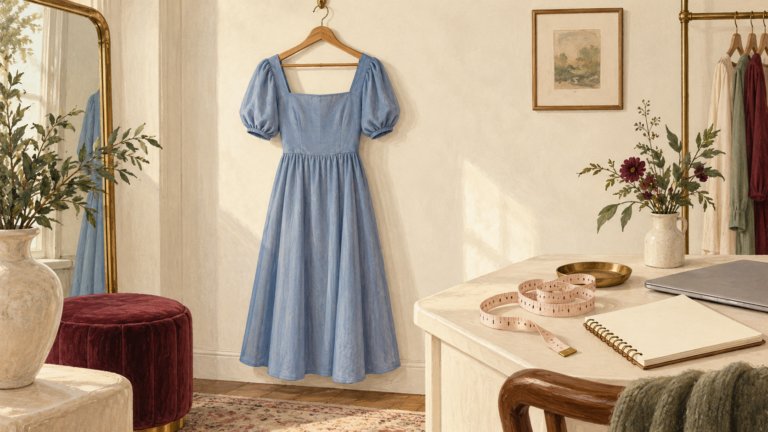
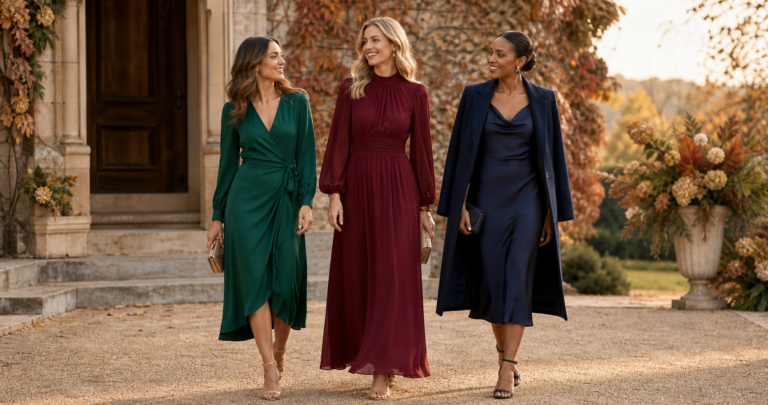
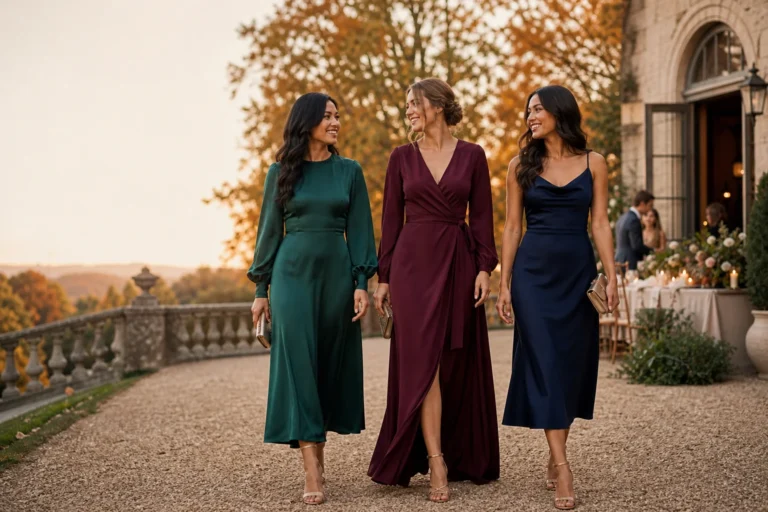
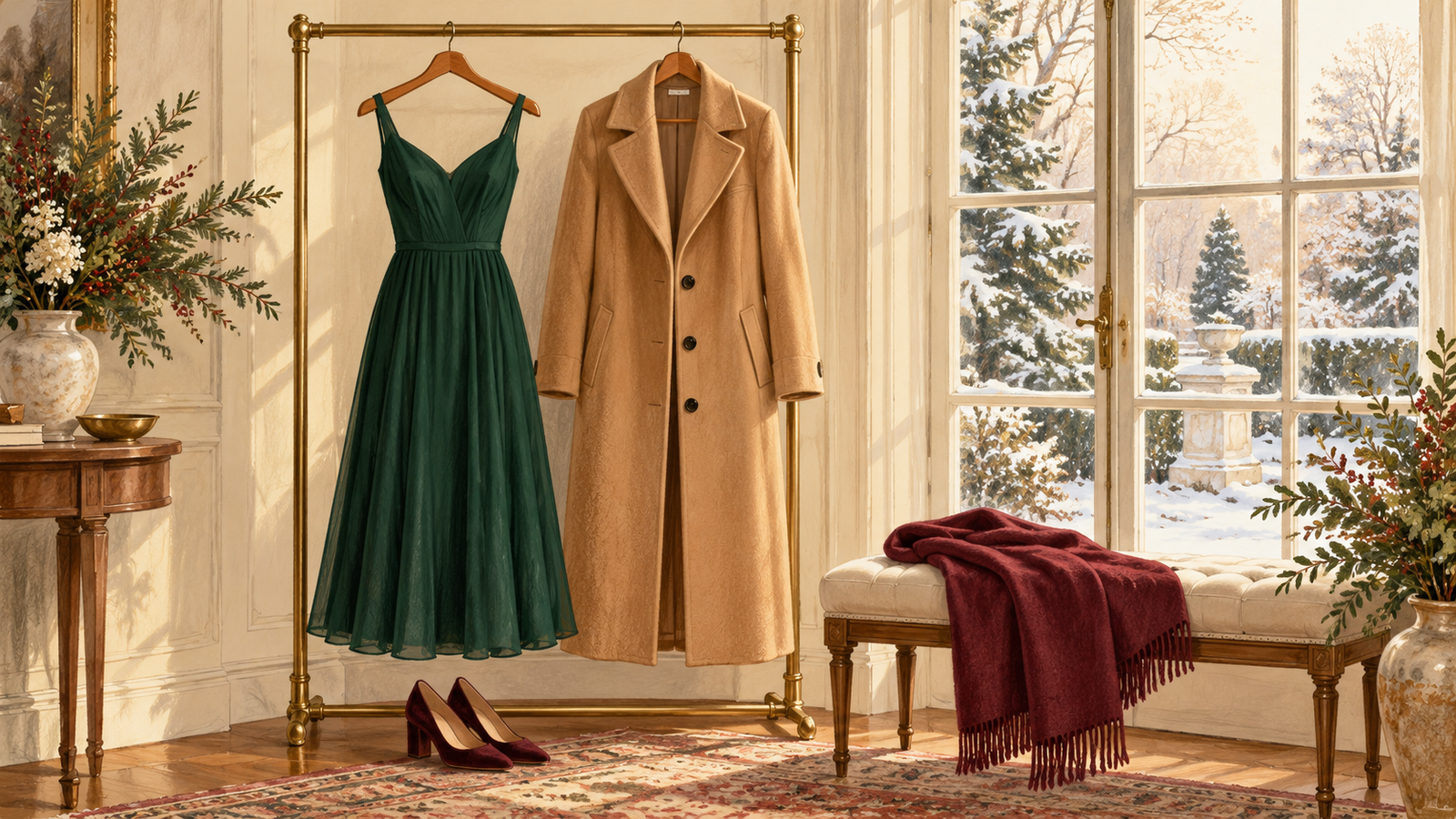
Cover and in-article images are AI-generated illustrations of generic garments and an imagined venue.
Choose your layer by where you will wear it
Before matching colors, ask three questions: How much time will I spend outside? Could I want to keep the layer on during the ceremony? Where will I leave it at the reception? An invitation that says “indoors” does not answer the first question; parking and transfers still count.
| Layer | When to consider it | Try it on and check | Main limitation |
|---|---|---|---|
| Long coat | Travel, arrival and outdoor photographs | Fasten it over the complete outfit; check the sleeves, sitting room and skirt underneath. | It may need storage once you are inside. |
| Wrap or shawl | An indoor layer you can drape over your shoulders and remove easily | See whether it stays put when you sit, reach for your bag and greet someone. | An open drape leaves gaps; do not assume it provides the protection you need outdoors. |
| Cropped jacket or bolero | A defined shoulder layer that leaves more of the dress visible | Check where its hem meets the dress waist and whether the armholes allow movement. | A short hem leaves much of the body uncovered. |
| Tailored blazer | A structured outfit when its cut and finish suit the invitation | Look at the lapels with the neckline and the jacket hem with the skirt. | A dressy appearance does not establish warmth or weather resistance. |
| Fine-knit cardigan | A softer indoor layer, if it fits the event’s level of formality | Check the buttons, sleeve fit, neckline and any bunching over the dress. | Its suitability depends on the garment and dress code; a thin knit is not an outdoor-weather plan. |
Treat this as a shortlist, not a ranking. A coat and a cardigan solve different parts of the day. For the broader outfit rules, use our guide to wedding dress codes, shoes and layers; here, the focus is what goes over the dress.
Give the journey and the reception separate plans
Write down the day in three parts. This is more useful than choosing one layer for an imagined photograph.
- Getting there: include the walk from parking, waiting for transport and moving between venues. Check the forecast close to the day and choose outerwear for those actual conditions.
- The ceremony and photographs: ask whether these are inside, outside or a mixture. If you expect to sit with your coat on, test that position at home rather than only looking in a mirror.
- The reception: find out whether there is a coat check, a cloakroom or another place for outerwear. If you might want a lighter layer at the table, keep it accessible rather than buried in the car.
For example, you might arrive in a long coat with a wrap folded in your bag, then leave the coat at the cloakroom. If the venue has no storage, a second layer may be one more item to carry. Ask before packing both.

Retailer M&S’s winter wedding guide also points out that some ceremony venues can be chilly and that layers may come off later. That is a useful question to ask the venue, rather than a reason to assume every winter wedding needs the same outfit.
Try the coat over the whole outfit
Put on the dress, any planned underlayer, and the coat. Add the bag you intend to carry. A coat that fits over a T-shirt may feel different over a puff sleeve or a structured shoulder.
- Fasten the coat. Look for pulling at the chest and waist. Try it both open and closed; you may need the closed version outside.
- Move your arms. Reach forward and lift your bag. Notice whether the dress sleeves bunch or the coat pulls across your back.
- Sit down. Check that the skirt, coat and any belt allow the position you will actually use at the ceremony or in a car.
- Walk and turn. Check whether you catch the dress hem, whether the coat shifts, and whether you need a hand to keep anything in place.
There is no single correct coat-to-dress hem ratio. A longer coat can give a continuous line over a midi dress; a cropped jacket can emphasize the waist of a fuller skirt. These are visual options to compare in a mirror, not rules about body shape. Choose the combination you like and can move in.
Use a wrap, jacket or cardigan as part of the outfit
If you intend to keep a layer on inside, give it the same try-on time as the dress. It should work with the neckline, sleeves and bag, rather than being something you spend the evening rearranging.
For a wrap: try the drape while seated. If you need a hand to hold it closed, decide whether that will be irritating during the ceremony or a meal. If you use a fastening, check that it is suitable for the fabric rather than putting a pin straight through a delicate garment.
For a jacket or blazer: compare the open and closed versions. A jacket that looks right open may hide a detail you like when fastened. Check for friction against beads, sequins or raised embroidery before wearing the two pieces together.
For a cardigan: look at the finish as well as the color. Buttons, cuffs, pilling and stretched edges all affect how it looks with an occasion dress. Try what you own before deciding you need a special wedding cardigan.
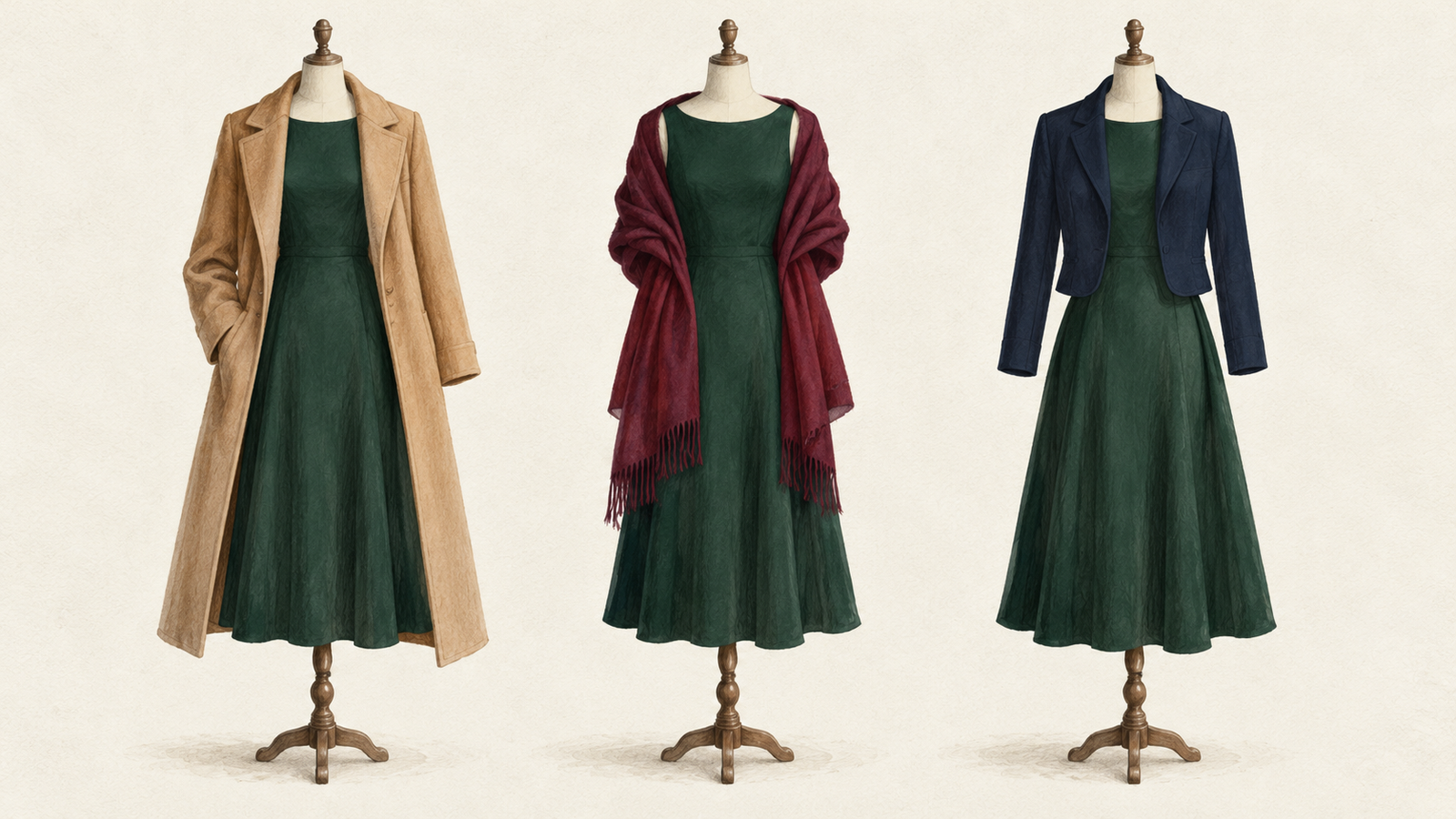
Three combinations to try before buying anything
These are starting ideas using generic pieces, not shopping recommendations. Each still needs the venue, dress code and forecast checks above.
A midi dress, long coat and small wrap
Try a simple green midi with a camel coat, then add a burgundy wrap only if you want an indoor option. Keep the rest of the outfit quiet while you compare the colors. If the three pieces feel too busy together, use a wrap closer to the coat or dress color.
A fuller skirt with a shorter jacket
Try a cropped jacket over the dress to see more of the skirt and waist. If the jacket hem and dress waist compete, compare another length before abandoning the dress. Keep a separate outdoor coat in the plan if the shorter jacket does not suit the conditions.
A simple dress with a soft indoor layer
For an event where the dress code allows it, compare a neat cardigan with a draped shawl. Sit and move in both. The better choice may be the one you can leave alone once it is on, rather than the one that looks most elaborate on a hanger.
Check the garment details, not just the fabric name
“Wool blend,” “velvet” and “lined” are not temperature ratings. Check the composition, construction, coverage and fastening of the actual garment, then consider how you will use it. A lining description alone does not tell you that a coat is suitable for rain.
REI’s layering guidance distinguishes insulation from protection against wind and rain. It is written for outdoor activities, not weddings, but the distinction is useful here: a decorative indoor layer and weather-suitable outerwear do not necessarily do the same job.
If buying something, check its measurements and return terms before ordering. Look at the care label too. The FTC’s care-label guidance explains the role of garment care instructions. Follow the instructions for the actual piece; do not assume that a coat, wrap and embellished dress can all be washed or steamed the same way.
Your before-you-leave checklist
Copy this list into your notes or print it with the guide.
- Confirm where the ceremony and photographs will take place.
- Check the forecast and the route between transport and each venue.
- Try on the dress, layer, shoes and bag together.
- Fasten, sit, reach and walk in the outfit.
- Decide where the outdoor coat will go at the reception.
- Keep any indoor wrap or cardigan where you can reach it.
- Check the care instructions before last-minute washing or pressing.
Questions about winter wedding layers
Can I wear a coat over a formal dress?
Yes. Plan outerwear for the journey and outdoor portions, then choose a cut and finish you like with the dress. You can remove it inside. If the invitation gives particular arrival or ceremony instructions, follow those.
Is a shawl enough for a winter wedding?
It may be the indoor layer you want, but do not treat it as a substitute for outerwear without considering the conditions. Check how much it covers and how much time you expect to spend outside.
Does my coat have to be longer than my dress?
No. Compare the whole silhouette and check that both hems are manageable when you walk. A visible dress hem is a styling choice; it does not automatically mean the coat is wrong.
Do I need to buy a new coat for one wedding?
Try the suitable coats you already own first. Borrowing a layer or using a separate indoor wrap may solve the outfit question. Buy only if your existing options do not meet the fit, event or weather needs.
Editorial note: This is a researched planning guide, not a review of tested garments. Style combinations are LivWithLuxe suggestions. The AI-generated illustrations depict generic garments and an imagined venue. AI assisted preparation.